Table of Contents
ToggleA lounge chair isn’t just furniture, it’s the place where you collapse after a long day, read Sunday morning papers, or sip coffee while planning the week ahead. The right modern lounge chair transforms a living room from functional to inviting, adding visual interest while delivering actual comfort. In 2026, homeowners have more options than ever, from iconic mid-century silhouettes to sleek contemporary designs. But choosing one means balancing aesthetics, ergonomics, and how it fits your space. This guide walks through what defines modern lounge chairs, which styles work best, and how to select and position one that elevates your living room without feeling like a showroom.
Key Takeaways
- Modern lounge chairs balance clean-line aesthetics with engineered ergonomics, featuring molded plywood, metal frames, and neutral or bold upholstery that elevates living room functionality and style.
- Mid-century modern classics like the Eames Lounge Chair ($5,000–$7,000 for authorized versions) and contemporary minimalist designs each offer distinct advantages depending on space constraints and personal preference.
- Prioritize seat height (16–18 inches standard), depth (20–24 inches for taller users), and armrest height (24–26 inches) to ensure comfort; always check return policies when buying online.
- Quality frame construction using kiln-dried hardwood with mortise-and-tenon joints and high-density foam cushions (1.8–2.0 lbs/cubic foot) ensures durability and long-term value.
- Strategic placement—floating the chair 12–18 inches from walls, angling it toward seating areas, and anchoring with an 8 × 10-foot rug—maximizes spatial flow and creates dedicated reading or conversation zones.
- Leather and performance fabric each offer trade-offs; full-grain aniline leather develops character over time, while solution-dyed acrylic and polyester blends resist stains and UV fading in high-traffic homes.
What Makes a Lounge Chair “Modern”?
The term “modern” gets tossed around loosely, but in furniture design it refers to specific characteristics rooted in 20th-century movements, particularly mid-century modern from the 1940s–60s and contemporary design from the 1970s onward. A modern lounge chair typically features clean lines, minimal ornamentation, and an emphasis on form following function.
Materials matter. Expect to see molded plywood, bent steel tubing, leather upholstery, and walnut or teak wood. Unlike traditional overstuffed armchairs with carved legs and tufted backs, modern pieces use exposed frames, tapered legs, and geometric shapes. The Eames Lounge Chair, introduced in 1956, remains the gold standard: molded plywood shell, leather cushions, and a five-star aluminum base.
Modern doesn’t mean uncomfortable. Early designers like Charles and Ray Eames, Arne Jacobsen, and Ludwig Mies van der Rohe studied ergonomics intensely. The angle of the backrest, depth of the seat, and height of the armrests are engineered for long-term sitting. You’ll find reclined seat backs (often 100–110 degrees) and ottoman pairings for leg support.
Color palettes lean neutral, black, white, gray, tan, and natural wood tones dominate. But mid-century modern embraces bold accent colors like burnt orange, teal, and mustard yellow, especially in upholstered pieces. Contemporary minimalist designs stick to monochrome and let the silhouette do the talking.
Top Modern Lounge Chair Styles for Every Living Room
Mid-Century Modern Classics
Mid-century modern lounge chairs are the workhorses of contemporary living rooms. Think Eames, Saarinen Womb Chair, and the Barcelona Chair. These designs have been in continuous production for decades because they work.
The Eames Lounge Chair and Ottoman uses seven-ply molded plywood with a rosewood or walnut veneer, leather cushions, and die-cast aluminum base. Dimensions run about 32 inches wide × 32 inches deep × 32 inches high, with the ottoman at 26 × 21 × 16 inches. Expect to pay $5,000–$7,000 for an authorized Herman Miller version, or $800–$1,500 for well-made replicas. Replicas often use lower-grade plywood and bonded leather, so check construction details.
The Womb Chair by Eero Saarinen wraps you in a fiberglass shell with foam padding and fabric upholstery. It’s wider than the Eames (about 40 inches), making it ideal for curling up. The molded fiberglass shell requires careful handling during moves, it can crack if dropped.
For smaller living rooms, the Egg Chair by Arne Jacobsen offers a high back and enclosed sides, creating a semi-private nook. It swivels on a four-star aluminum base and works well in corners. Width is about 34 inches, so it fits tighter spaces than the Womb Chair.
All three styles pair beautifully with cozy living room layouts that emphasize conversation areas and natural light.
Contemporary Minimalist Designs
Contemporary lounge chairs strip away decorative elements, focusing on material quality and proportion. Scandinavian brands like HAY, Muuto, and Fredericia lead here, alongside Japanese minimalism from designers like Naoto Fukasawa.
The cantilever lounge chair uses a single piece of bent steel tubing or laminated wood as both frame and support. Ludwig Mies van der Rohe’s MR Lounge Chair pioneered this in 1927, and it’s still sold by Knoll. The frame is chromed steel tubing (about 1 inch diameter), with leather straps or upholstery. It’s visually light, making it perfect for small living rooms where bulky furniture overwhelms.
Slipper chairs sit low to the ground (seat height around 14–16 inches vs. standard 18 inches) and have no arms. They’re ideal for reading nooks or pairing with a low-profile sofa. Upholstery can be performance fabric (solution-dyed acrylic or polyester blends) for stain resistance, which matters in high-traffic homes.
Leather vs. fabric is a practical choice. Full-grain aniline leather develops a patina but shows wear and stains. Semi-aniline leather has a protective topcoat for easier cleaning. Performance fabrics like those from Crypton or Sunbrella resist spills and UV fading, making them smart for sunny rooms or homes with kids and pets.
Design enthusiasts looking for cutting-edge options often turn to modern furniture showcases for inspiration on emerging designers and sustainable materials.
How to Choose the Perfect Modern Lounge Chair
Start with seat height and depth. Standard lounge chairs have a seat height of 16–18 inches and depth of 20–24 inches. Taller individuals (over 6 feet) need deeper seats (24+ inches) to avoid dangling legs. Shorter users (under 5’4″) may find deep seats uncomfortable without a lumbar pillow.
Test the backrest angle. A 100-degree angle works for reading: 110–120 degrees suits napping. Adjustable recliners add versatility but introduce mechanical parts that can fail. If you’re buying online without testing, check return policies, many retailers offer 30-day trials.
Armrest height affects usability. Armrests at 24–26 inches from the floor let you rest arms comfortably while sitting upright. Lower armrests (20–22 inches) work for lounging but make it harder to stand up, which matters for older adults or anyone with mobility issues.
Measure your space. A lounge chair with ottoman needs about 5 feet of floor space (depth) and 3 feet (width), plus clearance for walking. In tight quarters, a chair without an ottoman or a wall-hugger recliner (requires only 6 inches from the wall to recline) makes more sense.
Frame construction separates quality from junk. Look for kiln-dried hardwood frames (oak, maple, or beech) joined with mortise-and-tenon or dowel joints, not just staples and glue. Metal frames should be welded steel or cast aluminum, not hollow tube with slip-fit connectors.
Cushion fill matters for longevity. High-density polyurethane foam (1.8–2.0 lbs/cubic foot) holds shape better than low-density foam. Down-wrapped foam (a foam core wrapped in down feathers) offers plush comfort but requires fluffing. Pure down sags quickly unless you’re committed to daily maintenance.
Weight capacity isn’t always listed, but most lounge chairs are engineered for 250–300 lbs. If you need higher capacity, check specs or contact the manufacturer. Reinforced frames and eight-way hand-tied springs (instead of sinuous/zigzag springs) support more weight.
Consider traffic flow. Lounge chairs often anchor elegant living room arrangements, but they shouldn’t block pathways. Leave at least 30 inches of clearance around the chair for comfortable movement.
Placement and Styling Tips for Maximum Impact
Position matters as much as the chair itself. Angle a lounge chair 30–45 degrees toward the sofa to encourage conversation without rigid formality. Pairing it with a floor lamp (around 60 inches tall) creates a dedicated reading zone.
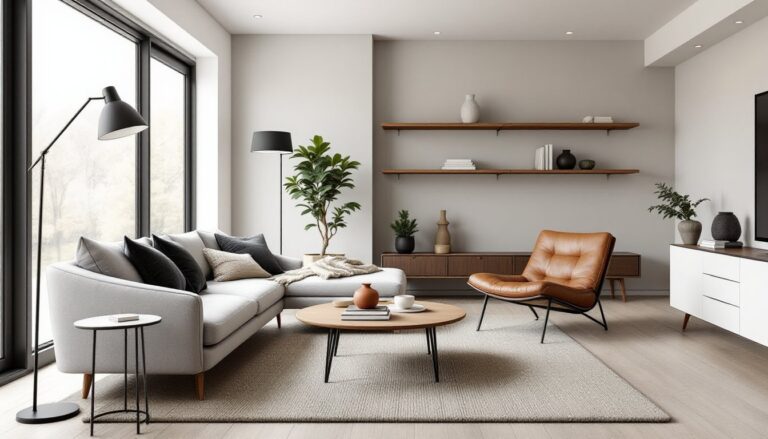
In open-plan layouts, a lounge chair and ottoman can define a separate zone without walls. Place it perpendicular to the main seating area with a side table (18–24 inches high) for drinks and books. This setup works especially well in modern farmhouse living rooms where you want casual, layered spaces.
Anchor the chair with an area rug. The front legs of the chair and ottoman should sit on the rug, visually connecting them to the space. An 8 × 10-foot rug typically works for a lounge chair grouping in a medium-sized room.
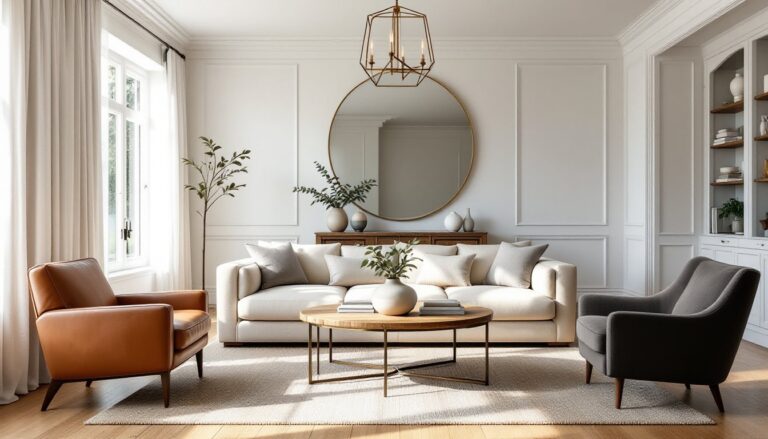
Balance proportions. A chunky Eames-style chair pairs well with a streamlined sofa: a delicate cantilever chair complements a heavier sectional. Mixing furniture weights prevents the room from feeling too matchy or monotonous.
Layer textures to avoid sterility. A leather lounge chair softens with a wool or linen throw draped over the back. Add a lumbar pillow (12 × 20 inches or 18 × 18 inches) in a contrasting fabric, maybe a geometric print if the chair is solid, or vice versa.
Don’t push furniture against walls. Floating a lounge chair 12–18 inches from the wall makes the room feel larger and more intentional. This approach shines in showcases of beautifully designed LA living rooms, where spatial flow takes priority.
Incorporate art or shelving behind the chair to create a focal wall. A piece of oversized art (40 × 60 inches or larger) centered above the chair draws the eye. Open shelving with books and objects adds depth without clutter.
For homes with eclectic tastes, consider innovative rocking lounge chairs that blend modern aesthetics with functional movement, offering a fresh take on traditional designs.
Conclusion
A modern lounge chair is an investment in daily comfort and long-term style. Whether you lean toward mid-century icons or contemporary minimalism, the right choice balances ergonomics, materials, and spatial harmony. Take measurements, test seat depths, and don’t skip the return policy. Your living room, and your back, will thank you.