Table of Contents
ToggleA large living room is a blessing, until it starts feeling like an empty warehouse with furniture pushed against the walls. The challenge isn’t space: it’s knowing how to use it without creating dead zones or an echoing cavern. With the right layout approach, a spacious living room becomes a series of inviting, functional areas that feel intentional rather than overwhelming. This guide walks through the fundamentals of arranging furniture, defining zones, and using design elements to make every square foot count.
Key Takeaways
- Large living room layout ideas work best when furniture is scaled appropriately and pulled away from walls to create intimate, purposeful zones rather than empty, disconnected areas.
- Divide your large living room into distinct zones—such as a primary conversation area anchored by a sectional, a secondary reading nook, and a dedicated entertainment zone—to maximize functionality and prevent wasted space.
- Use large area rugs (8×10 feet or larger), layered lighting at varying heights, and substantial accessories to visually define spaces and prevent the room from feeling like an empty warehouse.
- Proper traffic flow demands clear pathways of 30-36 inches between doorways and seating, with 14-18 inches between a coffee table and sofa for comfortable leg room.
- Create focal points by anchoring furniture to architectural features like fireplaces or prominent windows, or use large-scale art pieces to justify furniture placement and add intentional structure to the layout.
Why Proper Layout Matters in a Large Living Room
A poorly planned large living room wastes potential. When furniture floats aimlessly or clings to perimeter walls, the center becomes a no-man’s-land that nobody uses. Proper layout transforms that void into purposeful territory.
Scale matters more in large rooms than small ones. A three-seat sofa that anchors a 12×14 room will look lost in an 18×24 space. Understanding proportions prevents the “furniture showroom” effect where pieces seem disconnected from each other. The goal is to create intimate groupings within the larger footprint, think of it as building rooms within a room.
Traffic flow also demands attention. People need clear paths between doorways, seating areas, and functional zones without navigating an obstacle course. Standard walkways should be 30-36 inches wide, with at least 14-18 inches between a coffee table and sofa for comfortable leg room. In larger layouts, these measurements keep circulation logical while preserving the usable square footage for actual living.
Creating Distinct Zones for Multi-Functional Living
Large living rooms beg for zoning, dividing the space into dedicated areas for different activities. This approach prevents the room from feeling like a vacant lot while maximizing functionality.
Conversation Areas and Seating Arrangements
The primary seating cluster should anchor the room. A classic arrangement uses a sectional or sofa facing two accent chairs with a coffee table in the center. Position this grouping 8-10 feet from the television or fireplace to maintain intimacy without crowding.
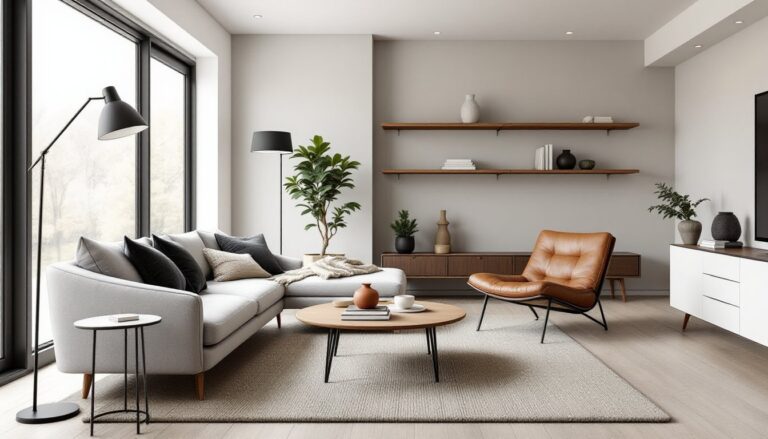
In oversized rooms, consider a floating furniture arrangement pulled away from walls. Place the sofa 3-4 feet from the wall to create a walkway behind it, this counterintuitive move actually makes the room feel cozier by defining boundaries. Add a console table behind the sofa for visual weight and functional surface area.
For rooms exceeding 400 square feet, a secondary seating area works well. Place two club chairs with a small side table near a window to create a reading nook, or position a loveseat and ottoman perpendicular to the main seating for overflow conversation space. Keep these zones at least 4-5 feet from the primary grouping to maintain separation.
Many designers incorporate layered lighting approaches to visually distinguish conversation areas from other zones. Floor lamps behind seating and table lamps on end tables create pools of light that naturally define gathering spots.
Entertainment and Media Zones
Designating an entertainment area prevents the TV from dominating the entire room. In large layouts, the media wall can occupy one end while other activities happen elsewhere.
Mount or place the television at eye level when seated, typically 42-48 inches from floor to center for most sofas. Viewing distance should be 1.5 to 2.5 times the diagonal screen size (a 65-inch TV needs 8-13 feet of distance). This math determines how far to pull seating from the media wall.
Built-in shelving or a media console 60-72 inches wide grounds the TV and provides storage. In particularly large rooms, consider a partial-height bookshelf or room divider perpendicular to the entertainment zone, this creates separation without blocking sightlines or light.
Sound system placement follows the room’s geometry. Soundbars work for straightforward layouts, but larger spaces benefit from discrete speakers positioned at ear height. Homes prioritizing versatile room atmospheres often integrate speakers into multiple zones for whole-room audio or localized listening.
Furniture Placement Strategies to Avoid the Empty Look
Empty-looking large rooms typically suffer from undersized furniture or poor placement, not lack of stuff. The fix involves scale, layering, and strategic anchoring.
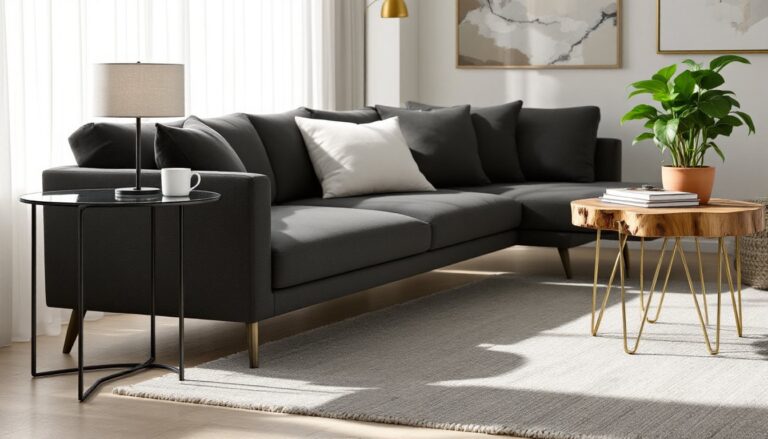
Start with appropriately scaled pieces. A sectional measuring 110-140 inches works better than a standard 84-inch sofa in rooms over 350 square feet. Oversized coffee tables (48-60 inches long) and substantial accent chairs prevent the “dollhouse furniture” problem. If existing pieces seem small, add a second sofa perpendicular to the first to form an L-shape.
Anchoring furniture to architectural features gives purpose to placement. Position seating to face a fireplace, built-ins, or a prominent window. In rooms lacking focal points, create one with a large-scale art piece or an accent wall to justify the furniture arrangement.
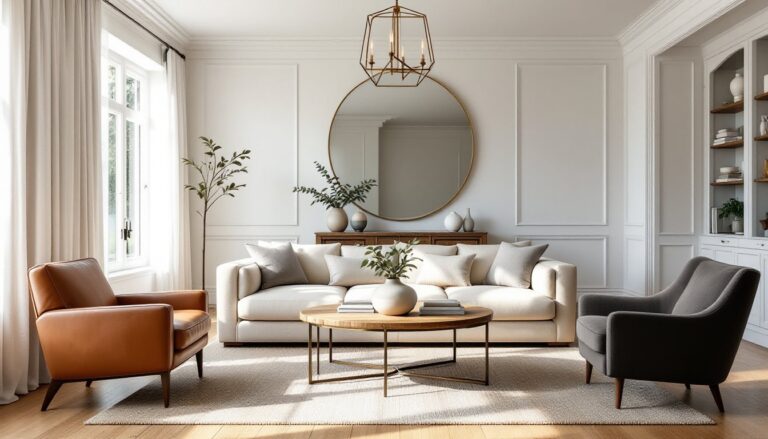
Symmetry and asymmetry both work, the key is intentionality. Balanced arrangements (matching chairs flanking a sofa) feel formal and grounded. Asymmetrical layouts (sofa plus chaise with varied accent chairs) introduce energy but require careful spacing to avoid looking haphazard.
Layer furniture at varying heights. A 68-inch bookshelf next to a 30-inch console table beside a 16-inch ottoman creates visual rhythm. This vertical variety keeps the eye moving and prevents the flat, empty expanse that plagues poorly furnished large rooms.
Don’t forget negative space, it’s a feature, not a failure. Leaving 6-8 feet of open floor in high-traffic areas or near doorways prevents clutter while maintaining the room’s spacious feel. The goal is intentional openness, not accidental emptiness.
Using Rugs, Lighting, and Accessories to Define Space
Furniture alone won’t solve a large room’s layout challenges. Rugs, lighting, and accessories provide the visual boundaries that make zones feel cohesive.
Area rugs are critical for defining seating areas. In large living rooms, opt for rugs at least 8×10 feet or 9×12 feet, the front legs of all seating should rest on the rug, with enough coverage to unify the grouping. Undersized rugs (5×7 feet in a spacious room) create a disjointed look. For multiple zones, use separate rugs with 24-36 inches of bare floor between them to visually distinguish areas.
Rug placement under furniture matters. All furniture legs on the rug creates maximum cohesion: front legs only works if the rug is large enough to anchor each piece. Avoid floating a tiny rug in the middle of a conversation area, it reads as an afterthought.
Lighting layers add depth and dimension. Combine overhead fixtures (chandeliers or recessed lighting), task lighting (reading lamps, picture lights), and ambient lighting (floor lamps, sconces). In large rooms, a single ceiling fixture creates a cave effect, multiple light sources at different heights prevent dark corners and emphasize distinct zones. Contemporary designs incorporating strategic fixture placement use lighting to guide movement through the space.
Dimmers installed on overhead circuits allow mood adjustment, bright for cleaning, soft for entertaining. Expect to spend $15-30 per dimmer switch, plus installation if hiring an electrician. (Note: dimmer installation requires basic electrical knowledge: homeowners uncomfortable working with live circuits should hire a licensed professional. Electrical work may require permits depending on local codes.)
Accessories complete the layout by adding scale and personality. Large rooms need substantial pieces: a 36-inch round mirror instead of a 20-inch one, a 30-inch tall vase instead of tabletop décor. Groupings of three or five items create focal points on consoles and shelves. Current interior design philosophies favor curated collections over scattered clutter, a few meaningful pieces outperform dozens of small objects.
Use vertical space with tall bookcases, floor-to-ceiling curtains, and statement artwork. Hanging curtains at ceiling height (even if windows are lower) draws the eye up and makes the room feel more proportional. Similar strategies work in rooms with architectural focal points where vertical elements emphasize the room’s height.
Consider color as a zoning tool, different accent colors in throw pillows, blankets, or artwork can subtly distinguish the entertainment area from the reading nook. Keep the palette cohesive (three to four main colors) to prevent visual chaos.
Conclusion
Large living rooms reward thoughtful planning. By creating distinct zones, scaling furniture appropriately, and using rugs and lighting to define space, homeowners transform expansive rooms from empty boxes into multi-functional gathering areas. The layout should feel deliberate, not accidental, every piece placed with purpose, every zone serving a clear function. With these strategies, a spacious living room becomes an asset rather than a design puzzle.