Table of Contents
ToggleSide tables are easy to overlook, until you don’t have one. Modern side tables anchor seating arrangements, provide landing spots for drinks and remotes, and fill visual gaps that make a living room feel incomplete. They’re not just functional. When chosen right, they act as sculptural accents that reinforce your room’s design direction without shouting for attention. In 2026, the best modern side tables balance clean lines with material warmth, mixing metals, wood, and glass in ways that feel intentional, not trendy. This guide walks through the styles trending now, how to choose the right table for your layout, and even a DIY project if you’re feeling handy.
Key Takeaways
- Modern side tables anchor seating arrangements while serving as sculptural accents that balance clean lines with material warmth, including mixed metals, wood, and glass combinations.
- The ideal modern side table height ranges from 24 to 26 inches, sitting level with or slightly below the arm of your sofa, with round designs at 16-18 inches being a common sweet spot for compact spaces.
- Trending 2026 styles include minimalist metal and glass designs that maximize visual space, organic live-edge wood slabs for natural character, and woven materials like rattan and seagrass for textured interiors.
- Strategic placement beyond the default sofa flanking—such as between conversation chairs, behind floating sofas, or in corners—maximizes function and creates visual interest without bulky coffee tables.
- DIY modern side table projects like hairpin leg tables ($50 in materials), concrete and wood hybrids, and plywood geometric designs offer budget-friendly alternatives to retail options starting at $150 to $500+.
Why Modern Side Tables Are Essential for Contemporary Living Rooms
A modern living room without side tables feels unfinished, like a sentence without punctuation. They serve practical roles: holding lamps for task lighting, corralling charging cables, providing a place to set a book or coffee mug. But they also contribute to visual balance.
In open-plan homes, side tables help define zones. A pair flanking a sofa anchors the seating area and creates symmetry, which the eye reads as calm and intentional. A single accent table next to an armchair carves out a reading nook without walls or rugs.
Modern design favors negative space, so side tables do double duty as sculptural elements. A sleek metal frame or a live-edge wood slab adds texture and contrast without clutter. Unlike bulky coffee tables, side tables occupy vertical space, which keeps sightlines open, critical in smaller living rooms where every square foot counts.
They’re also one of the easiest pieces to swap out when you want to refresh a room’s look. Changing a side table’s material or finish can shift the entire vibe, from industrial to organic, cool to warm, without repainting or reupholstering.
Top Modern Side Table Styles Trending in 2026
Minimalist Metal and Glass Designs
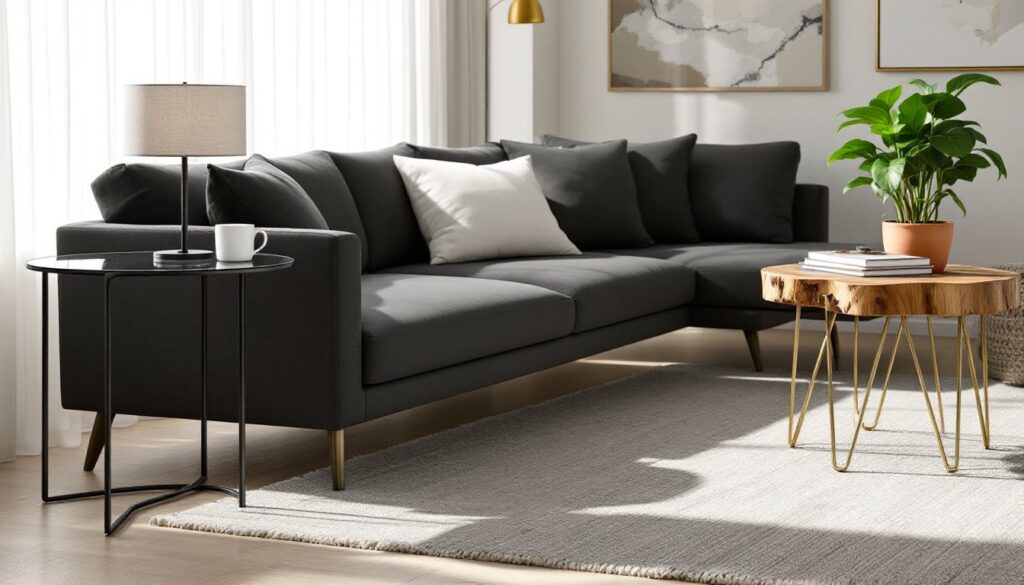
Minimalist side tables strip away ornamentation and let geometry do the talking. Think tubular steel frames in matte black or brushed brass, paired with tempered glass tops or thin marble slabs. These tables read as light and airy, ideal for compact spaces or rooms with heavy upholstery.
Metal and glass combinations work well in contemporary living rooms that lean industrial or Scandinavian. The transparency of glass keeps the floor visible, which tricks the eye into seeing more space. Brass and gold-toned metals add warmth without bulk, while powder-coated black steel anchors a neutral palette.
Look for welded joints and clean seams. Cheap stamped-metal bases wobble and show their price. Quality examples from modern design sources feature TIG-welded frames and UV-bonded glass, which won’t yellow or separate over time.
One consideration: glass tops show fingerprints and dust. If you’ve got kids or pets, a metal-only design or a glass table with a lower shelf for frequently used items might save you daily wiping.
Organic Wood and Natural Materials
Wood side tables are having a moment, but not the glossy, matchy-matchy sets from decades past. The trend in 2026 leans toward live-edge slabs, reclaimed lumber, and mixed species with visible grain.
White oak, walnut, and teak are popular for their durability and natural character. A live-edge table, where the bark edge is left intact or minimally shaped, brings an organic counterpoint to clean-lined sofas and metal accents. Pair it with hairpin legs or a welded steel base for a modern hybrid look.
Reclaimed wood tables carry history. Barn wood, salvaged joists, or old factory flooring give each piece unique patina and color variation. Just confirm the wood has been kiln-dried and properly finished. Untreated reclaimed lumber can warp or harbor insects.
Natural materials extend beyond wood. Rattan, cane, and woven seagrass tables are gaining traction, especially in coastal-inspired interiors. These materials add texture without weight and pair well with linen upholstery and neutral palettes.
Finish matters. A matte or satin polyurethane protects the wood while letting the grain show. Avoid high-gloss lacquers unless you’re deliberately going for a mid-century vibe.
How to Choose the Perfect Modern Side Table for Your Living Room
Start with height. A side table should sit level with or slightly below the arm of your sofa or chair, typically 24 to 26 inches tall. If it’s too low, you’ll strain reaching for a drink. Too high, and it visually disrupts the seating line.
Measure before you shop. Bring a tape measure or use a phone app to confirm dimensions. Nominal and actual sizes can differ, especially with handmade or vintage pieces.
Scale is next. In a room filled with oversized sectionals and chunky coffee tables, a spindly side table looks lost. Conversely, a heavy drum table can overwhelm a pair of armless chairs. Match visual weight: substantial furniture gets substantial side tables, lighter pieces get slimmer frames.
Consider the footprint. Round and oval tables work well in tight spaces because there are no corners to bump. Square and rectangular tables maximize surface area if you need room for a lamp, books, and a drink. A 16 to 18-inch diameter is a common sweet spot for round accent tables.
Think about storage. Open shelves or lower tiers are handy for stashing remotes and magazines. Enclosed drawers keep clutter hidden but add bulk. Many modern designs skip storage entirely to maintain clean lines, fine if you’ve got other organizational systems in place.
Material choice should echo other finishes in the room. If your coffee table is reclaimed wood, a matching wood side table reinforces the theme. If you’ve got mixed metals elsewhere (cabinet pulls, light fixtures), a brass or steel side table ties it together. Contrast works too: a glass table can lighten a room dominated by dark wood furniture.
Finally, mobility matters. Side tables without casters or handles are harder to shift when you vacuum or rearrange. If you entertain often and need flexibility, lighter materials like aluminum or small-scale wood tables are easier to move than solid marble or concrete.
Creative Placement Ideas to Maximize Function and Style
The default placement, flanking a sofa, works, but it’s not the only option. Try a single side table tucked between two chairs in a conversational grouping. This creates intimacy and defines the seating zone without a bulky coffee table in the center.
In smaller living rooms, skip the coffee table altogether and use a pair of side tables instead. They offer the same surface area but leave more floor space for flow. You can also separate them when you need extra seating or shuffle furniture for movie night.
Float a side table behind a sofa if the sofa sits away from the wall. This adds a landing spot for lamps or decor and fills the visual gap. Make sure it’s sturdy enough not to tip if someone leans back hard.
Use a side table as a makeshift nightstand in a studio or multipurpose room. A small round table beside a daybed serves double duty for living and sleeping. Choose one with a lower shelf to keep books or a charging station within reach.
Layer heights for visual interest. If you’ve got a low-slung sofa, pair it with a taller side table and a table lamp to draw the eye upward. Conversely, a high-armed sofa benefits from a slightly lower table to avoid a top-heavy look.
In open-concept spaces, side tables can act as room dividers. A narrow console table or a tall plant stand placed strategically helps separate the living area from the dining zone without blocking sightlines.
Don’t overlook corners. A small triangular or wedge-shaped side table fits into dead space and holds a lamp or a trailing plant. Corner tables are underrated for filling awkward gaps left by sectional sofas.
DIY Modern Side Table Projects for Budget-Conscious Homeowners
Building your own side table is one of the most approachable DIY furniture projects. You don’t need a full shop, just basic tools, patience, and attention to material prep.
Hairpin Leg Table
This is the gateway DIY for modern side tables. Buy a set of three-rod hairpin legs (8 to 16 inches tall) and pair them with a round or square wood top. Home centers sell pre-cut pine rounds and plywood squares, or you can cut your own from 3/4-inch hardwood plywood.
- Sand the top with 120-grit, then 220-grit sandpaper. Wipe with a tack cloth.
- Apply two coats of satin polyurethane or a penetrating oil finish like Danish oil. Let each coat dry per the manufacturer’s instructions.
- Attach the hairpin legs using the included screws. Pre-drill pilot holes to prevent splitting. A cordless drill works fine, but a magnetic bit holder speeds things up.
- Flip it over and you’ve got a modern accent table for under $50 in materials.
Use walnut, white oak, or maple for a premium look. Avoid big-box construction lumber (2×12 boards) unless you plane it flat, it’s usually warped and rough.
Concrete and Wood Hybrid
For an industrial vibe, cast a concrete top and pair it with a wood base. You’ll need high-strength concrete mix (5,000 PSI minimum), a melamine form, and concrete sealer.
- Build a form from melamine-coated particleboard. Interior dimensions should match your desired tabletop size, around 16 x 16 inches for a square table.
- Mix the concrete according to the bag (usually a 4:1 ratio of mix to water). Pour into the form and vibrate out air bubbles by tapping the sides with a rubber mallet.
- Let cure for 48 hours minimum, then demold. Sand any rough edges with 80-grit sandpaper.
- Seal with two coats of penetrating concrete sealer to prevent staining.
- Attach the slab to a simple wood frame or metal base using construction adhesive and lag bolts.
Safety note: Wear gloves and a dust mask when mixing concrete. Wet concrete is caustic and can burn skin.
Plywood and Dowel Construction
If you want a fully custom shape, cut geometric panels from birch plywood and join them with wood dowels and glue. This method lets you create angular, faceted tables that look high-end.
- Sketch your design. A simple three-sided pyramid or drum shape works well.
- Cut panels on a table saw or have them cut at the home center. Edges must be square for clean joints.
- Drill dowel holes using a doweling jig to keep them aligned. Use 3/8-inch dowels and wood glue.
- Clamp the assembly and let the glue cure for 24 hours.
- Fill any gaps with wood filler, sand smooth, and finish with paint or stain.
This approach requires more precision but yields a one-of-a-kind piece. Resources like Homify show examples of DIY geometric furniture if you need design inspiration.
Repurposed Materials
Scour salvage yards or online marketplaces for old stools, drum shells, or wooden crates. A vintage metal stool can become a side table with a simple wood or glass top added. An old wooden crate, cleaned and sealed, works as a rustic open-shelf table.
Just confirm structural integrity. Wobbly joints need re-gluing or reinforcement with metal brackets. Sand and refinish any surface that will be touched or hold items to avoid splinters.
Budget for these DIY projects typically runs $30 to $100 depending on materials and finishes. That’s a fraction of retail modern side tables, which start around $150 and climb past $500 for designer pieces featured on curated design sites. Plus, you’ll have a piece that fits your exact space and style.