Table of Contents
ToggleIndoor plants aren’t just trendy, they’re functional design tools that solve real living room problems. They soften hard edges, improve air quality, and fill empty corners without permanent commitment. Whether you’re working with a sun-drenched space or a north-facing cave, there’s a plant-and-display combo that’ll work. This guide covers practical placement strategies, plant selection for different light conditions, and DIY display projects that won’t blow your budget. No lifestyle fluff, just actionable ideas you can execute this weekend.
Key Takeaways
- Indoor plants decoration goes beyond aesthetics—they filter air pollutants, regulate humidity, and soften hard surfaces while improving sound absorption in modern living rooms.
- Match your plant selection to actual light conditions using a light meter or shadow test; low-light options like pothos and snake plants thrive in north-facing spaces, while statement plants like fiddle-leaf figs and monstera need bright, indirect light.
- Layer plants vertically across different heights and use corner activation, symmetrical flanking, and windowsill staging to create visual depth and maximize the impact of your living room indoor plants decoration.
- Choose planters based on function and aesthetics—terracotta suits succulents, glazed ceramic offers moisture retention and color variety, and all pots must include drainage holes to prevent root rot.
- Build budget-friendly display solutions like tiered lumber stands, macramé hangers, and concrete planters in a weekend for $20-50, ensuring proper wall anchoring to safely support multiple potted plants.
Why Indoor Plants Are Essential for Modern Living Rooms
Plants do more than look good on Instagram. They’re working elements in your living room’s ecosystem.
Air quality improvement is the most documented benefit. NASA’s Clean Air Study identified pothos, snake plants, and peace lilies as effective at filtering formaldehyde, benzene, and trichloroethylene, common off-gassing culprits from furniture, paint, and flooring. You’ll need roughly one plant per 100 square feet for measurable impact, but even a couple makes a difference.
Humidity regulation matters more than most homeowners realize. Plants release moisture through transpiration, which can raise indoor humidity by 5-10%. That’s helpful in winter when forced-air heating dries out spaces, cracking wood furniture and irritating sinuses. Ferns and areca palms are especially effective humidifiers.
Visual softening is the aesthetic payoff. Hard surfaces dominate most living rooms, drywall, wood trim, glass tables, upholstered furniture with straight lines. Plants introduce organic curves and varying textures that break up geometric monotony. They’re particularly useful for balancing color schemes that lean heavily on neutral tones.
Acoustic dampening is an underrated benefit. Large-leafed plants like fiddle-leaf figs and rubber trees absorb and deflect sound waves, reducing echo in rooms with hardwood or tile floors. Not a replacement for rugs or curtains, but a helpful layer.
Choosing the Right Plants for Your Living Room Layout
Match plants to your room’s actual light conditions, not what you wish they were. Use a light meter app (most are free) or the shadow test: sharp, defined shadows mean bright light: soft or no shadows indicate low light.
Best Low-Light Plants for Living Rooms
North-facing windows and corners far from glass need plants that tolerate, or prefer, dim conditions.
Snake plants (Sansevieria) are nearly indestructible. They’ll survive in as little as 50 foot-candles (roughly 10 feet from a north-facing window). Water every 2-3 weeks. Their upright, architectural form works in modern and coastal living rooms alike.
Pothos handles low light and neglect. It’s a trailing plant, perfect for bookshelves or hanging planters. Golden pothos adds warm yellow variegation: jade pothos offers solid dark green. Root cuttings in water to propagate free plants.
ZZ plants (Zamioculcas zamiifolia) have glossy, almost plastic-looking leaves that thrive in fluorescent office lighting, so your dim living room is fine. They grow slowly, making them low-maintenance fillers for small living rooms where aggressive growers would quickly outpace the space.
Cast iron plant (Aspidistra) earned its name by tolerating abuse. It handles low light, irregular watering, and temperature swings. The downside: slow growth. Don’t expect dramatic changes.
Statement Plants That Make a Bold Impact
If you’ve got bright, indirect light (within 5 feet of an east or west window, or filtered south light), go big.
Fiddle-leaf fig (Ficus lyrata) is the go-to floor plant for interiors. It needs bright, indirect light and consistent watering (let the top 2 inches of soil dry between waterings). Rotate it quarterly to prevent leaning. Expect leaves to drop if you move it, they’re drama queens about relocation.
Monstera deliciosa delivers instant jungle vibes with those iconic split leaves. It’s a climber, so give it a moss pole or trellis. Less fussy than fiddle-leaf figs about watering. The free-spirited vibe fits eclectic and boho interiors perfectly.
Bird of paradise (Strelitzia) reaches 5-6 feet indoors with paddle-shaped leaves. It needs several hours of direct sun to thrive, so save this for south-facing windows. Underwatering is the main killer, keep soil consistently moist during growing season.
Rubber tree (Ficus elastica) has thick, burgundy or variegated leaves. It’s more forgiving than fiddle-leaf figs but still needs bright light. Wipe leaves monthly with a damp cloth to remove dust that blocks photosynthesis.
Creative Plant Placement Ideas to Maximize Visual Appeal
Placement is half the battle. Even great plants fail when they’re dumped randomly around the room.
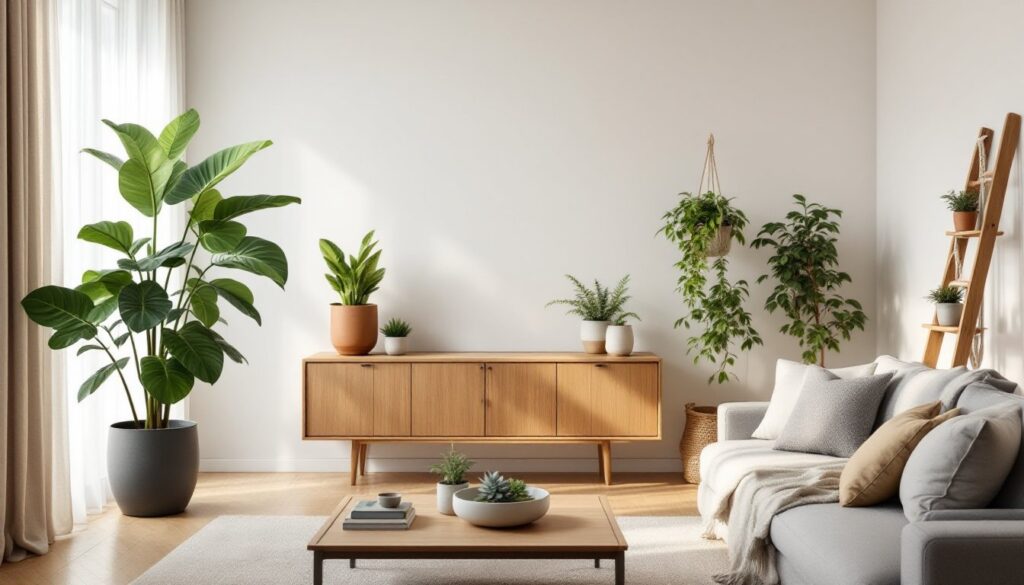
Vertical layering creates depth. Place a tall floor plant (5-6 feet) in a corner, a medium tabletop plant (2-3 feet) on a side table or console, and a trailing plant on a floating shelf or bookcase. This triangulates sight lines and prevents the “all one height” flatness that makes rooms feel generic.
Symmetrical flanking works for formal layouts. Place matching plants on either side of a sofa, fireplace, or media console. Use identical pots for maximum impact. Snake plants, dracaenas, and palms work well for this traditional approach, especially in elegant living rooms.
Corner activation turns dead space into focal points. Large plants like bird of paradise, fiddle-leaf figs, or kentia palms fit into corners that can’t accommodate furniture. Add an uplight (LED floor can or spotlight) to cast dramatic shadows on the ceiling at night.
Windowsill staging maximizes light for sun-hungry plants while framing views. Arrange 3-5 small pots (4-6 inches) along a sill: herbs, succulents, or compact tropicals like peperomia. Use matching containers for cohesion.
Coffee table centerpieces work if you keep them low, under 12 inches, so they don’t block conversation sight lines. Shallow bowls with succulents, air plants mounted on driftwood, or a single low-profile pothos in a ceramic planter all work. Research from interior design experts shows vines can add unexpected texture when used creatively.
Hanging planters free up floor space while adding height variation. Install ceiling hooks rated for at least 10 pounds (most plants in hanging pots weigh 3-7 pounds, but you want margin). Locate studs or joists with a stud finder. Drywall anchors can work for lightweight plants, but joist mounting is safer. Pothos, string of pearls, and Boston ferns are classic choices.
Selecting Planters and Pots That Complement Your Decor Style
The planter matters as much as the plant. Mismatched containers kill an otherwise solid design.
Material selection affects both aesthetics and function. Terracotta is porous, allowing roots to breathe and soil to dry faster, great for succulents and plants prone to root rot, but requires more frequent watering. Glazed ceramic retains moisture better and comes in endless colors and finishes. Fiberglass or resin planters mimic ceramic or concrete at a fraction of the weight, useful for large floor plants you might need to move. Wood planters (usually cedar or teak) fit rustic or cozy living rooms but need a plastic liner to prevent water damage.
Drainage is non-negotiable for plant health. All pots need drainage holes. If you’ve fallen in love with a decorative pot without holes, use it as a cachepot, place the nursery pot inside and remove it to water in a sink, letting excess drain before returning it.
Color coordination grounds the look. For neutral-heavy rooms (grays, whites, beiges), introduce matte black, charcoal, or natural terracotta pots. For rooms with bold wall colors, stick to white or neutral containers so plants pop without competing. Metallic finishes, brass, copper, brushed gold, add warmth but should be limited to 1-2 accent pieces.
Scale matters. A plant’s foliage spread should be roughly 1.5-2 times the pot diameter for visual balance. Undersized pots make plants look top-heavy: oversized pots swallow the greenery. Floor planters for statement plants should be 10-14 inches in diameter: tabletop pots typically run 4-8 inches.
Texture layering adds sophistication. Pair smooth glazed pots with woven baskets or concrete planters with soft, trailing foliage. Mixing finishes (matte + glossy, rough + smooth) creates visual interest without pattern overload.
DIY Plant Display Projects for Budget-Conscious Homeowners
You don’t need expensive store-bought stands. These projects use common materials and basic tools.
Tiered plant stand from scrap lumber: Build a simple corner shelf unit with three tiers. You’ll need:
- (3) 1×10 boards, cut to desired lengths (12″, 16″, 20″ creates a stepped effect)
- (4) 1×2 vertical supports, 36″ tall
- Wood screws (1¼” or 1½”)
- Drill/driver
- Level
- Sandpaper (120-grit)
- Paint or stain (optional)
- Sand all pieces smooth.
- Assemble vertical supports in a rectangular frame using two 1x2s as front legs and two as rear legs.
- Attach shelves at staggered heights (12″, 24″, 36″ from floor).
- Secure to wall studs with L-brackets for stability, this prevents tip-over if a pet or child bumps it.
- Finish with paint or leave raw for a minimalist look.
Hanging macramé plant holders: If you can tie knots, you can make these. Cotton cord (5mm diameter), scissors, and a metal or wood ring are all you need. Tutorials on home decor platforms walk through basic square knot and spiral patterns. Budget about 60 feet of cord per hanger. Total cost: under $10.
Ladder plant shelf: Repurpose an old wooden ladder (check estate sales or Habitat ReStores). Sand it down, apply a coat of exterior-grade polyurethane if it’ll be near watering traffic, and lean it against a wall at a 15-20° angle. Secure the top to a wall stud with a screw eye and cable for safety. Place pots on the rungs. This works especially well for lighting-conscious displays where you can position plants at varying distances from windows.
Concrete DIY planters: Mix Quikrete countertop mix (smoother finish than standard concrete) according to package directions. Pour into two nested containers (a larger outer mold and smaller inner mold, separated by 1-2″ on all sides). Weight the inner mold so it doesn’t float. Let cure 48 hours, demold, and seal with concrete sealer. Drill a drainage hole with a masonry bit (use water to cool the bit and prevent cracking). Industrial aesthetic on a shoestring.
Wall-mounted plank shelves: Cut a 1×6 or 1×8 board to length, sand, finish, and mount with heavy-duty shelf brackets rated for the load. Locate studs, drill pilot holes, and use 3″ wood screws. Space multiple shelves 12-18″ apart vertically to create a gallery-style plant wall. Advice from DIY and design experts emphasizes proper anchoring, drywall alone won’t support multiple potted plants.
All these projects take a weekend or less and cost $20-50 in materials. The time investment pays off in customized solutions that fit your exact space.