Table of Contents
ToggleA modern traditional living room doesn’t mean choosing between your grandmother’s wingback chair and a sleek mid-century sofa, it means having both. This design approach marries the warmth and craftsmanship of traditional interiors with the clean lines and functionality of contemporary style. The result? A space that feels collected, intentional, and livable. Whether you’re working with a period home that needs updating or a new build that lacks character, understanding how to balance these two aesthetics will help you create a room that’s both elegant and comfortable.
Key Takeaways
- A modern traditional living room combines the warmth and craftsmanship of classic interiors with contemporary clean lines and functionality for a collected, intentional space.
- Neutral base colors (whites, grays, taupes) create a calm backdrop that allows architectural details and furniture to shine in modern traditional design.
- Select classic furniture silhouettes upholstered in contemporary fabrics and mix pieces from different sources to achieve the layered, intentional feel that defines this style.
- Preserve existing trim work and crown molding by painting them in soft, cohesive tones or crisp white, treating them as assets rather than features to hide.
- Layer multiple textures and fabrics—such as linen, velvet, and leather—across upholstery, rugs, and accessories to create depth and visual interest.
- Use lighting fixtures with geometric, restrained designs in aged brass or matte finishes to bridge traditional and modern aesthetics without overwhelming the space.
What Defines a Modern Traditional Living Room?
Modern traditional design sits at the intersection of classic architecture and contemporary sensibility. It’s not a 50/50 split, the ratio shifts based on your home’s bones and your personal taste. What remains constant is the emphasis on quality materials, thoughtful proportion, and restrained ornamentation.
Think of it this way: traditional design celebrates symmetry, rich woods, layered textiles, and decorative molding. Modern design values open space, neutral palettes, minimal hardware, and streamlined furniture. A modern traditional room borrows the architectural integrity and comfort of the former while embracing the edited, uncluttered aesthetic of the latter.
This approach works particularly well in homes with existing trim work, crown molding, or built-ins. Rather than ripping out these features to achieve a stark modern look, you preserve them and pair them with furniture and finishes that feel current. The style also lends itself to rustic modern influences when natural wood tones and textures are layered in.
Key Elements of Modern Traditional Design
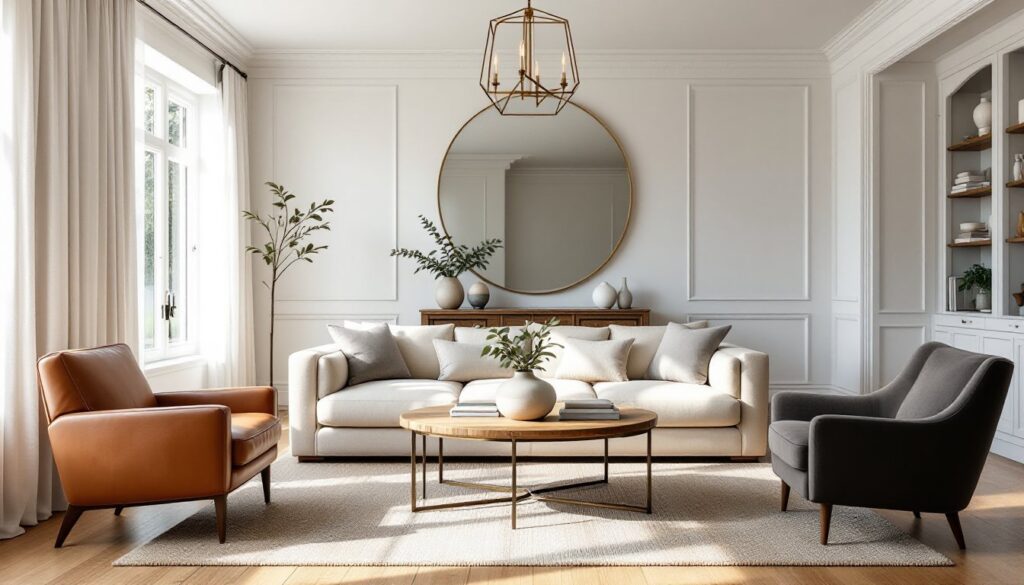
Several hallmarks define this hybrid style. Neutral base colors, whites, grays, taupes, and soft beiges, create a calm backdrop that lets architectural details shine. Classic furniture silhouettes (Chesterfield sofas, tufted ottomans, turned-leg tables) appear in updated fabrics or finishes. Symmetrical layouts anchor the room, but accessories and art can break the formality.
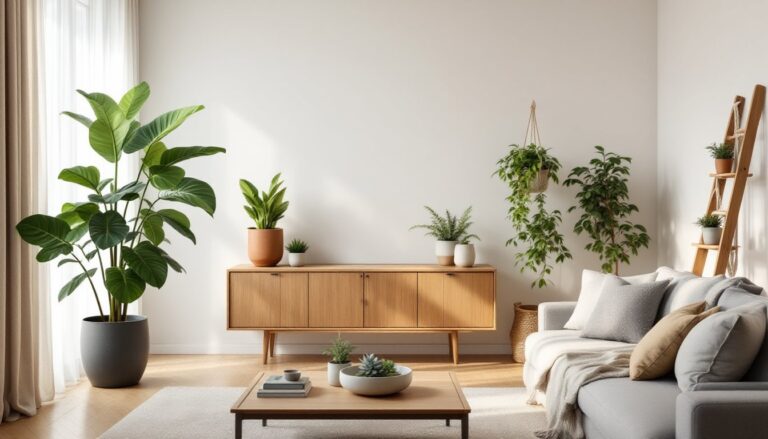
Natural materials play a starring role: hardwood floors, linen upholstery, wool rugs, and stone or marble accents. These textures add warmth without veering into country kitsch. Edited accessories mean fewer tchotchkes and more purposeful objects, a single large-scale mirror, a pair of table lamps, a curated bookshelf.
Finally, layered lighting (a mix of overhead fixtures, sconces, and task lamps) ensures the room feels intentional at any hour. Avoid matchy-matchy sets: instead, choose pieces that share a tonal or material thread but vary in scale and style.
Choosing the Right Color Palette for Your Space
Start with a neutral foundation. White, off-white, and warm gray walls allow trim, furniture, and textiles to stand out. If your living room has existing crown molding or wainscoting, painting both walls and trim in the same soft white (like Benjamin Moore’s White Dove or Sherwin-Williams’ Alabaster) creates a cohesive, gallery-like backdrop.
For rooms with abundant natural light, cooler grays work well. In north-facing or dim spaces, lean toward warmer taupes or greiges to prevent the room from feeling cold. Test paint samples on multiple walls and observe them at different times of day, morning light reads differently than afternoon sun.
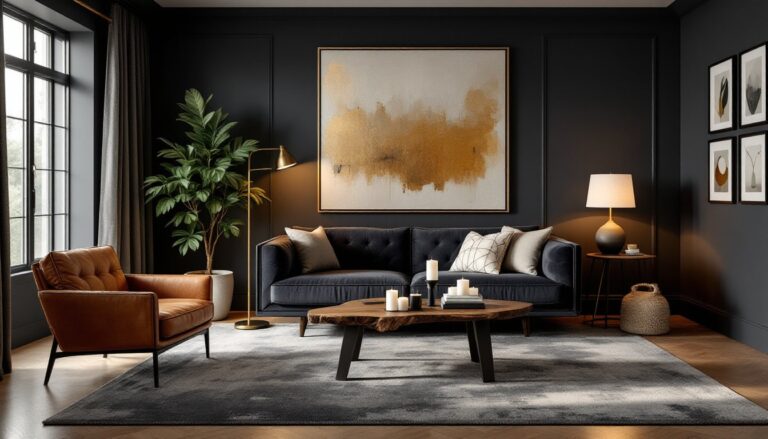
Once the base is set, introduce one or two accent colors through upholstery, pillows, or artwork. Navy, charcoal, deep green, or muted terracotta all pair well with neutral schemes. Keep the palette restrained: modern traditional design isn’t about bold color blocking. Instead, use color to add depth and visual interest without overwhelming the space.
Wood tones also function as part of your palette. Medium to dark walnut, oak, or cherry furniture adds warmth and ties the room to traditional roots. If you’re mixing wood finishes, stick to similar undertones (all warm or all cool) to maintain cohesion. A well-planned color scheme can unify disparate elements and make your furniture selections feel intentional.
Selecting Furniture That Balances Old and New
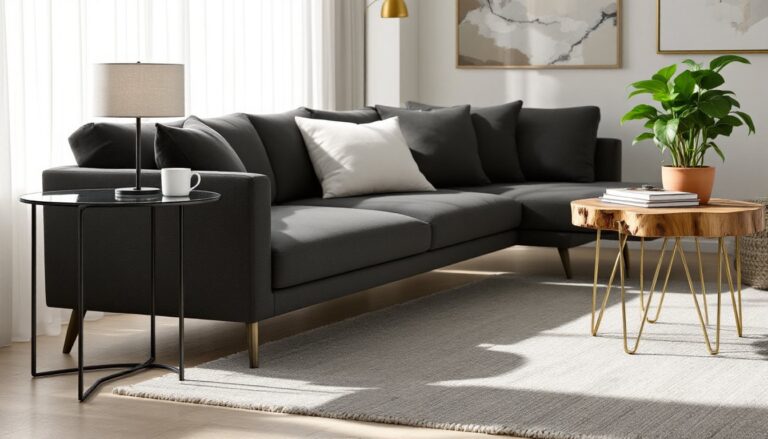
The furniture is where the “modern” and “traditional” tension gets resolved. Start with a sofa in a classic shape, rolled arms, English arms, or a straight Lawson style, but upholster it in a contemporary fabric. Linen, performance velvet, or a textured weave in a solid neutral keeps the look current. Avoid busy florals or heavy damasks unless you’re deliberately leaning more traditional.
Pair that sofa with accent chairs that shift the balance. A mid-century lounge chair, a sleek leather club chair, or even a modern wingback with tapered legs introduces contrast. Symmetry still works here, two matching chairs flanking a fireplace or side table, but the chairs themselves can be streamlined.
Coffee tables and side tables offer another opportunity to blend eras. A reclaimed wood coffee table with clean, square legs feels both rustic and modern. A marble-top side table on a brass base nods to traditional materials but in a minimal form. Avoid overly ornate carvings or fussy details: let the material and proportion do the work.
When selecting a living room set, resist the temptation to buy everything at once from the same collection. Mixing pieces from different sources, an antique console, a new sofa, vintage art, creates the layered, collected feel that defines this style. If you’re working with hand-me-downs or vintage finds, reupholstering in a modern fabric can bridge the gap between old and new.
Incorporating Architectural Details and Molding
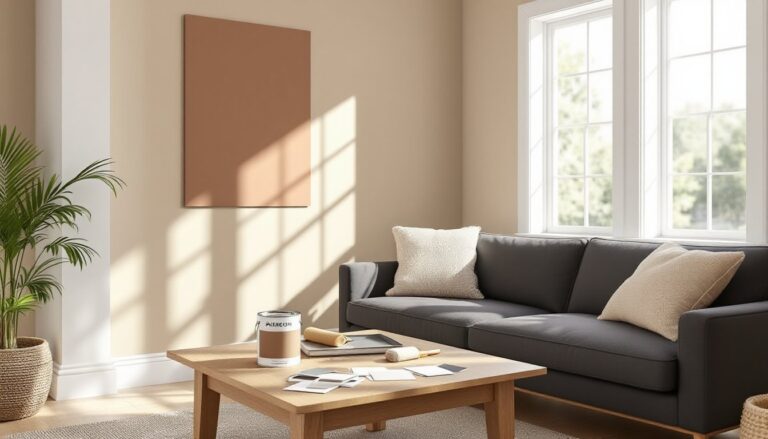
If your home has existing trim, crown molding, or paneling, treat it as an asset. Paint it the same color as the walls for a modern, monochromatic look, or choose a crisp white to define the architecture. Either approach works: the key is intentionality. Sloppy paint lines or peeling finish will undermine the entire aesthetic, so prep properly: fill nail holes with spackle, sand smooth, prime, and apply at least two coats of a durable trim paint (semi-gloss or satin).
Adding molding to a plain room is a straightforward DIY project if you’re comfortable with a miter saw and a nail gun. Crown molding, chair rail, or picture rail can elevate a builder-grade space, but keep profiles simple. Traditional molding tends toward ornate dentil or egg-and-dart details: modern traditional design favors clean, stepped profiles, think 3- to 5-inch crown with minimal fuss.
Installation requires precision. Measure twice, cut once, and use a coping saw for inside corners on crown molding (it’s more forgiving than mitering). Caulk all seams and nail holes, then paint. If this feels beyond your skill level, hire a finish carpenter, molding is visible every day, and poor execution shows.
Built-in shelving or a wall of cabinetry adds both storage and architectural interest. Shaker-style doors (flat panel with a simple frame) hit the sweet spot between traditional and modern. Paint them to match the walls or in a complementary neutral. Open shelving can display books, ceramics, or art, but keep it edited. A modern farmhouse aesthetic often uses similar millwork with slightly more rustic finishes.
Layering Textures and Fabrics for Depth
A room with a single fabric type, say, all linen or all leather, reads flat. Modern traditional design thrives on textural contrast: smooth velvet against nubby linen, polished leather next to a chunky knit throw, a sisal rug under a silk pillow.
Start with the largest surfaces. Upholstered furniture should introduce at least two textures. A linen sofa, leather chair, and velvet ottoman create instant variety. If your seating is all one material, use pillows and throws to add contrast. Mix pillow sizes (22-inch, 20-inch, and lumbar) and fabrics (linen, cotton, wool) in coordinating neutrals.
Rugs ground the room and add warmth. A natural fiber rug (jute, sisal, or seagrass) works in high-traffic areas and brings an organic, textured element underfoot. Layering a smaller wool or vintage rug on top adds pattern and softness. Make sure the rug is large enough, front legs of all seating should sit on it, or at minimum, the rug should extend 12–18 inches beyond the coffee table on all sides.
Window treatments soften hard architectural lines. Floor-length linen or cotton drapes in a neutral tone add verticality and can be functional or purely decorative. Mount the rod close to the ceiling and let the panels puddle slightly on the floor for a tailored, traditional look. If privacy isn’t a concern, skip heavy linings and let natural light filter through.
Don’t overlook smaller textural details: a ceramic vase, a woven basket, a brass candlestick. These finishes, matte, glossy, hammered, smooth, add subtle complexity. Resources like Homedit and Decoist offer visual inspiration for how these layers come together in real rooms.
Lighting Fixtures That Bridge Two Eras
Lighting is one of the easiest ways to telegraph your design intent. A traditional crystal chandelier says one thing: a sculptural pendant says another. Modern traditional design calls for fixtures that reference classic forms but execute them with restraint.
A chandelier with a simple, geometric frame, perhaps in aged brass or matte black, works over a coffee table or in the center of the room. Avoid heavy crystal drops or overly ornate metalwork. Instead, look for clean lines, exposed bulbs, or alabaster shades. The scale matters: a chandelier should be roughly one-third the width of the table or seating area below it.
Sconces flank a fireplace, mirror, or built-in shelving and provide ambient light. Swing-arm sconces in brass or bronze offer both function and a nod to traditional library lighting. Picture lights above artwork add a gallery feel. Keep finishes consistent across the room, mixing metals can work, but limit yourself to two (e.g., brass and matte black).
Table and floor lamps fill in task and ambient lighting gaps. A ceramic or turned-wood lamp base feels traditional: pair it with a crisp linen drum shade for balance. Alternatively, a sleek tripod floor lamp or an arc lamp introduces a modern silhouette. Dimmer switches on all overhead fixtures allow you to adjust lighting for mood, essential in a room meant for both entertaining and relaxing.
If you’re updating a living room with a fireplace, consider how the mantel and hearth interact with your lighting plan. Wall-mounted fixtures can highlight the architecture, while a statement chandelier draws the eye upward and balances the visual weight of the fireplace.