Table of Contents
ToggleNarrow living rooms don’t need to feel cramped or awkward, they just need a smart plan. The key challenge? Fitting a TV into a long, tight space without turning the room into a hallway with furniture. Whether you’re working with a shotgun-style apartment or a Victorian conversion, the right TV placement and layout can make the difference between a functional gathering spot and a frustrating squeeze. This guide walks through proven strategies for TV positioning, furniture arrangements, and design tricks that open up narrow spaces without sacrificing comfort or viewing angles.
Key Takeaways
- Short-wall TV mounting is ideal for narrow living rooms over 18 feet long, treating the space like a theater and keeping viewing distances at the optimal 7–10 feet range.
- Narrow living room layouts benefit from strategic TV placement that prioritizes traffic flow and viewing angles, with furniture arranged in distinct zones rather than simply lining walls.
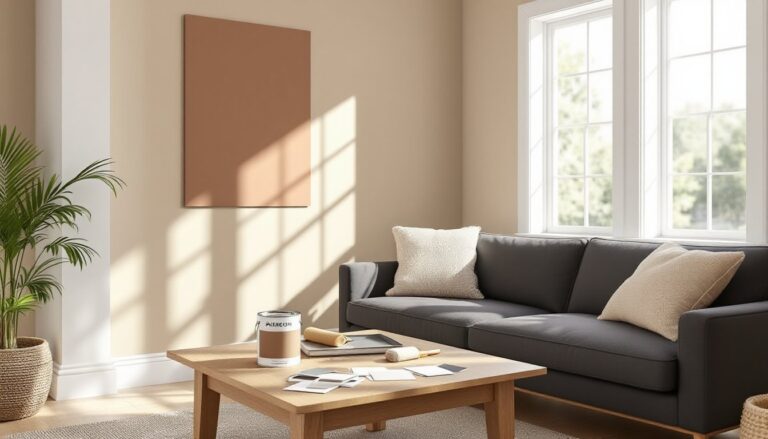
- Use light, cool colors on long walls and slightly darker shades on short walls to visually balance proportions and make narrow spaces feel wider.
- Round or oval coffee tables paired with low-profile, exposed-leg furniture reduces visual clutter and creates a sense of airiness in compact spaces.
- Area rugs and layered lighting define functional zones without blocking flow, while horizontal design elements like mirrors and wide artwork emphasize room width over height.
Why Narrow Living Rooms Need Strategic TV Placement
In a standard-proportion room, you can float furniture and experiment with angles. In a narrow room, typically defined as a space with a length-to-width ratio of 2:1 or greater, every inch counts, and poor TV placement kills flow.
The typical narrow living room is 10 to 12 feet wide and 18 to 24 feet long. That layout creates two problems: limited wall space on the short ends, and long sight lines that make viewing distance tricky. Mount the TV too high or too far down the long wall, and half the seating becomes uncomfortable.
TV placement also dictates traffic patterns. If the screen blocks the natural path through the room, you’ll have people walking between viewers and the TV constantly, annoying during a movie, disruptive during a game. Strategic placement keeps walkways clear and ensures the TV anchors a functional seating zone rather than dominating the entire room.
Another factor: viewing distance matters. For a 55-inch TV, the ideal distance is roughly 7 to 9 feet: for a 65-inch, it’s 8 to 10 feet. In a narrow room, you often can’t back seating up far enough if the TV is mounted mid-wall on the long side. That’s why short-wall mounting often works better, it shortens the viewing cone and frees up the long walls for seating and storage.
Best TV Wall Positions for Long, Narrow Spaces
Choosing the right wall for your TV is half the battle. Most narrow rooms have two realistic options: the short wall (endcap) or the long wall (side). Each has trade-offs.
Mounting on the Short Wall vs. Long Wall
Short wall mounting is the go-to for most narrow layouts. It treats the room like a theater: TV at one end, seating facing it, with the rest of the room behind or to the side. This setup minimizes viewing distance, keeps traffic along the edges, and lets you use the long walls for bookshelves, consoles, or a small entryway bench.
Best for: Rooms 18 feet or longer, where you can create a distinct TV zone without the screen dominating the entire space. Mount the TV at eye level when seated, typically 42 to 48 inches from the floor to the center of the screen. Use a low-profile or articulating wall mount to keep the TV flush and avoid eating into walking space.
One downside: if the short wall has windows or a fireplace, you’ll need to work around glare or reconsider your layout. Blackout shades or anti-glare screen protectors can help, but natural light directly behind or beside a screen is tough to manage.
Long wall mounting works when the short walls aren’t viable, think floor-to-ceiling windows, a fireplace you can’t move, or a doorway dead-center. Mounting mid-length on a long wall lets you angle seating toward the screen and create an L-shaped or parallel furniture layout.
Best for: Rooms under 16 feet long, where a short-wall mount would place the TV too close to seating. Also works if you’re splitting the room into two zones (TV area up front, dining or workspace in back).
The challenge: viewing angles. Anyone seated toward the ends of the room will be watching at an angle, which can wash out picture quality on older LCD panels. OLED or QLED screens handle off-axis viewing better. Also, you’ll need to keep the walkway clear on the opposite long wall, which limits furniture depth, stick to pieces 30 inches deep or less.
Tool note: use a stud finder to locate wall studs before mounting. Drywall anchors won’t hold a 50+ pound TV safely. If studs don’t line up where you want the TV, consider a mounting plate that spans multiple studs, or hire a handyman to install blocking between studs (requires opening the wall).
Furniture Arrangement Ideas That Work Around Your TV
Furniture placement in a narrow room is about creating zones, not just lining up a sofa. The TV should anchor one zone, with seating arranged to support both viewing and conversation.
For short-wall TV placement:
- Primary seating goes directly across from the TV: a sofa (72 to 84 inches long for a room this size) positioned 8 to 10 feet back. If the room is extra narrow, a loveseat (58 to 64 inches) might fit better without crowding the walkway.
- Secondary seating can flank the TV wall: two armchairs or a small settee perpendicular to the main sofa. This creates a U-shape that supports conversation and keeps sight lines open.
- Leave a walkway of 30 to 36 inches along at least one long wall. If you’re tight on space, go 24 inches minimum, anything less feels like squeezing through.
For long-wall TV placement:
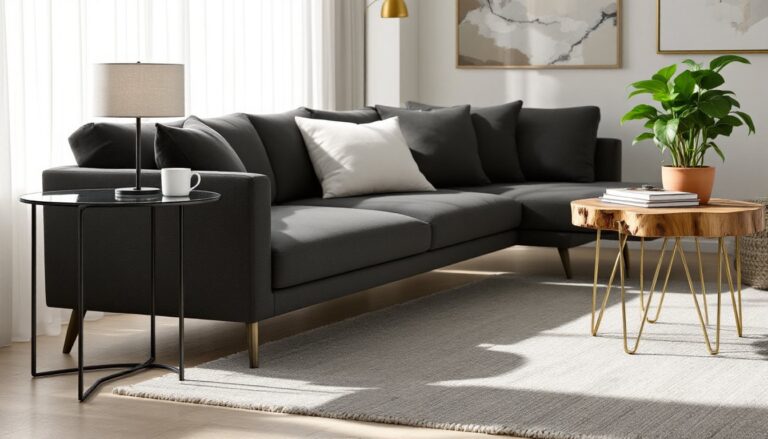
- Angle seating toward the screen. A sofa placed parallel to the opposite long wall works, but an L-shaped sectional tucked into the far corner creates a more cohesive zone and maximizes seating without blocking flow.
- Keep the TV-side wall clear except for a narrow media console (12 to 18 inches deep). Wall-mounted floating shelves above or beside the TV add storage without taking floor space.
- If the room is long enough, consider splitting it: TV and seating in the front two-thirds, a small workspace or reading nook in the back third, divided by a narrow console table or open shelving unit.
Coffee table considerations:
In a narrow room, a traditional rectangular coffee table can feel like a roadblock. Opt for a round or oval table (36 to 42 inches diameter) to soften the geometry, or use nesting tables you can tuck away when not needed. Keep the table 16 to 18 inches from the sofa edge for comfortable leg room.
Material note: glass or acrylic tables create visual lightness, helpful in tight spaces. Solid wood or upholstered ottomans add weight and can make the room feel smaller, though they’re fine if you’re balancing other lightweight furniture pieces.
Creating Functional Zones Without Blocking Flow
Narrow rooms benefit from implied zoning rather than hard divisions. Use furniture placement, area rugs, and lighting to define spaces without walls or bulky dividers.
Area rugs are the easiest zoning tool. A 5×8 or 6×9 rug under the TV seating area visually anchors that zone. Make sure the front legs of the sofa and chairs sit on the rug, floating all furniture off the rug makes the space feel disconnected.
If you’re creating a second zone (dining, workspace, entryway), use a second smaller rug to define it. Keep rugs in the same color family or pattern style to maintain cohesion.
Lighting also zones without blocking. A floor lamp beside the sofa and a table lamp on a side console signal different areas. Overhead lighting should be on separate switches or dimmers so you can adjust intensity by zone. Accent lighting, like LED strip lights behind the TV or under floating shelves, adds depth and draws the eye to specific features, making the room feel larger.
Avoid placing tall bookcases or storage units in the middle of the room, even as dividers. In narrow spaces, they cut sight lines and make the room feel chopped up. If you need storage, use low-profile credenzas (30 to 36 inches high) or wall-mounted cabinets that keep the floor clear. Many homeowners also integrate smart lighting solutions to enhance zones without adding physical bulk.
Design Tricks to Make Your Narrow Living Room Feel Wider
Good furniture arrangement solves function: smart design tricks solve perception. A few intentional choices can make a narrow room feel balanced and open.
Paint and color strategy:
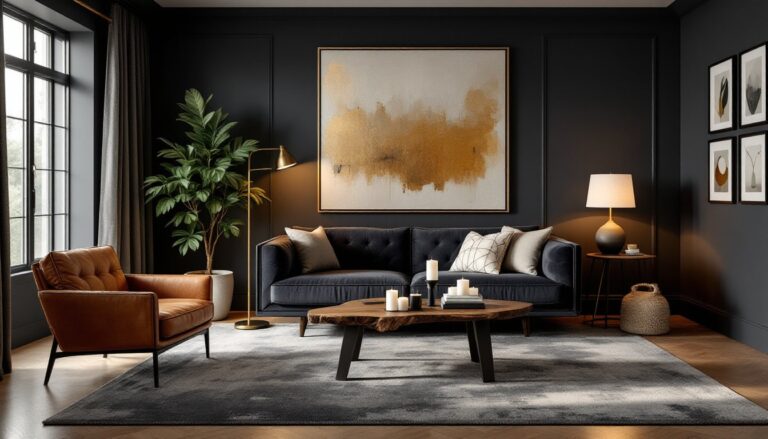
- Light, cool colors on the long walls (soft grays, blues, greens) recede visually, making the room feel wider. Avoid dark colors on long walls, they compress the space.
- Paint the short walls a shade or two darker to pull them forward and visually shorten the room, balancing the proportions.
- An accent wall behind the TV (if it’s on a short wall) adds depth without overwhelming. Stick to one accent wall: more than that fragments the space. Explore different color palettes for living spaces to find what works with your layout.
Horizontal lines and patterns:
Horizontal elements, striped rugs, long floating shelves, wide artwork, emphasize width. A single large-scale piece of art (like a 40×60-inch canvas) hung horizontally on a long wall creates visual breadth better than a gallery wall of small frames.
Avoid vertical stripes or tall, narrow decor on long walls. They accentuate height and make the narrowness more obvious.
Mirrors:
A large mirror on a long wall reflects light and creates the illusion of depth. Position it opposite a window if possible to bounce natural light. Avoid mirroring the short walls, it can create a tunnel effect.
Leaning a floor mirror (6 to 7 feet tall) against a long wall also works and adds a casual, layered look popular in spaces featured on design platforms like Apartment Therapy.
Furniture scale and profile:
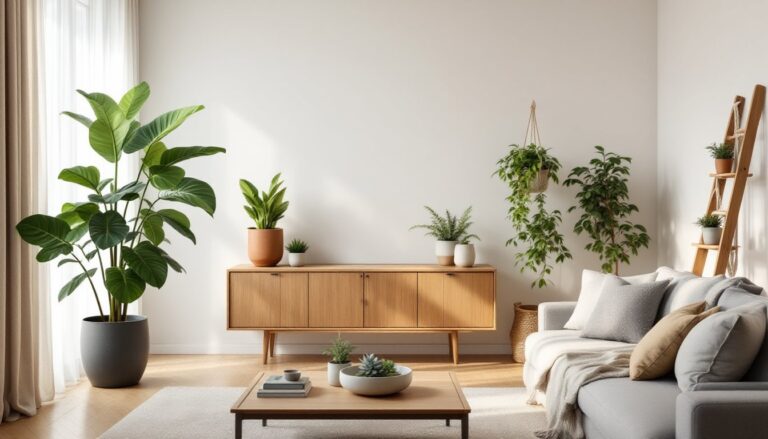
- Choose seating with exposed legs (not skirted sofas). Seeing floor underneath furniture creates airiness.
- Keep furniture low-profile, sofas and chairs with back heights under 32 inches don’t block sight lines or make the room feel cramped.
- Avoid oversized sectionals unless the room is at least 20 feet long. In shorter narrow rooms, they dominate and leave no room for movement.
Window treatments:
Hang curtains as close to the ceiling as possible and extend the rod 6 to 12 inches beyond the window frame on each side. When open, curtains stack off the glass, letting in maximum light and making windows (and walls) look wider. Use light, sheer fabrics during the day: add blackout liners if you need light control for TV viewing.
Built-ins and vertical storage:
If you own the space and can invest in improvements, floor-to-ceiling built-in shelving on one or both long walls adds tons of storage without eating floor space. Paint built-ins the same color as the walls to make them recede, or use open shelving to keep them airy. Many contemporary layouts draw inspiration from modern design galleries that emphasize vertical storage.
Safety note: any shelving taller than 6 feet should be anchored to wall studs with L-brackets or a furniture strap to prevent tipping, especially in homes with kids or pets.
Conclusion
Narrow living rooms reward planning over improvisation. Start with TV placement, short wall when possible, long wall when necessary, then build your furniture layout to support viewing and flow. Use color, lighting, and mirrors to shift perception, and keep furniture scaled to the space. The result is a room that feels purposeful and comfortable, not squeezed. For more spatial ideas that enhance narrow layouts, explore resources like design-focused platforms and consider how elements like texture and furnishings in cozy living setups bring warmth without bulk.